
Gabatarwa
The Wilfa Precision Automatic Coffee Brewer WSP-1B is designed to deliver an optimal coffee brewing experience. This manual provides detailed instructions for setting up, operating, and maintaining your coffee brewer to ensure consistent, high-quality results. Key features include precise temperature and water control, a detachable water tank, and adjustable flow control to customize your brew.
Samfurin Ƙarsheview
Familiarize yourself with the components of your Wilfa Precision Automatic Coffee Brewer.

Hoto na 1: Component Diagram of the Wilfa Precision Automatic Coffee Brewer.
- Kunnawa/kashewa
- Tankin ruwa mai cirewa
- Coffee jug (carafe)
- Tace mai
- Ikon ruwa da tsayawar ɗigo
- Maɓallin farawa / ci gaba da dumi
- Igiyar wuta tare da toshe
- Measuring spoon (5, 10, and 15g)
The brewer features a sleek design with a transparent, detachable water tank and a double-walled filter basket for optimal temperature during brewing.
Saita
- Cire kaya: Carefully remove all components from the packaging. Ensure all parts listed in the Product Overview suna nan.
- Wuri: Place the coffee brewer on a stable, flat, heat-resistant surface, away from water sources and direct heat.
- Farkon Tsaftacewa: Before first use, wash the glass carafe, filter holder, and water tank with warm, soapy water. Rinse thoroughly and dry.
- Shigar da Tankin Ruwa: Ensure the detachable water tank is securely placed on its base.
- Zagayen Shayarwa na Farko (Tsaftacewa): Fill the water tank to its maximum level with fresh, cold water. Do not add coffee. Place the empty filter holder and carafe in position. Run a full brew cycle to flush the system. Discard the water.

Hoto na 2: The Wilfa Precision Automatic Coffee Brewer set up on a kitchen counter.
Umarnin Aiki
- Cika Tankin Ruwa: Remove the detachable water tank and fill it with fresh, cold water to the desired level. The tank has marked measurements for water to coffee ground ratio. Re-attach the water tank securely.
- Shirya Matata: Place a paper filter (or reusable filter if applicable) into the filter holder.
- Ƙara Wurin Kofi: Add your desired amount of medium-ground coffee to the filter. For optimal results, use approximately 55 grams of coffee for 1 liter of water.
- Set Flow Control: Adjust the flow control dial on the filter holder to your preference. This allows you to control the brewing speed, mimicking a pour-over method. For a stronger brew, a slower flow rate can be selected. Ensure the drip stop is open for brewing.
- Fara Brewing: Press the start button. The brewer will heat water to the optimal temperature of 197º-205ºF and begin the brewing process.
- Ajiye Ayyukan Dumi: The hot warming plate will keep your coffee warm in the carafe after brewing is complete. The brewer automatically shuts off after one hour.

Hoto na 3: Filling the detachable water tank with precise measurements.

Hoto na 4: Adding coffee grounds to the double-walled filter basket.
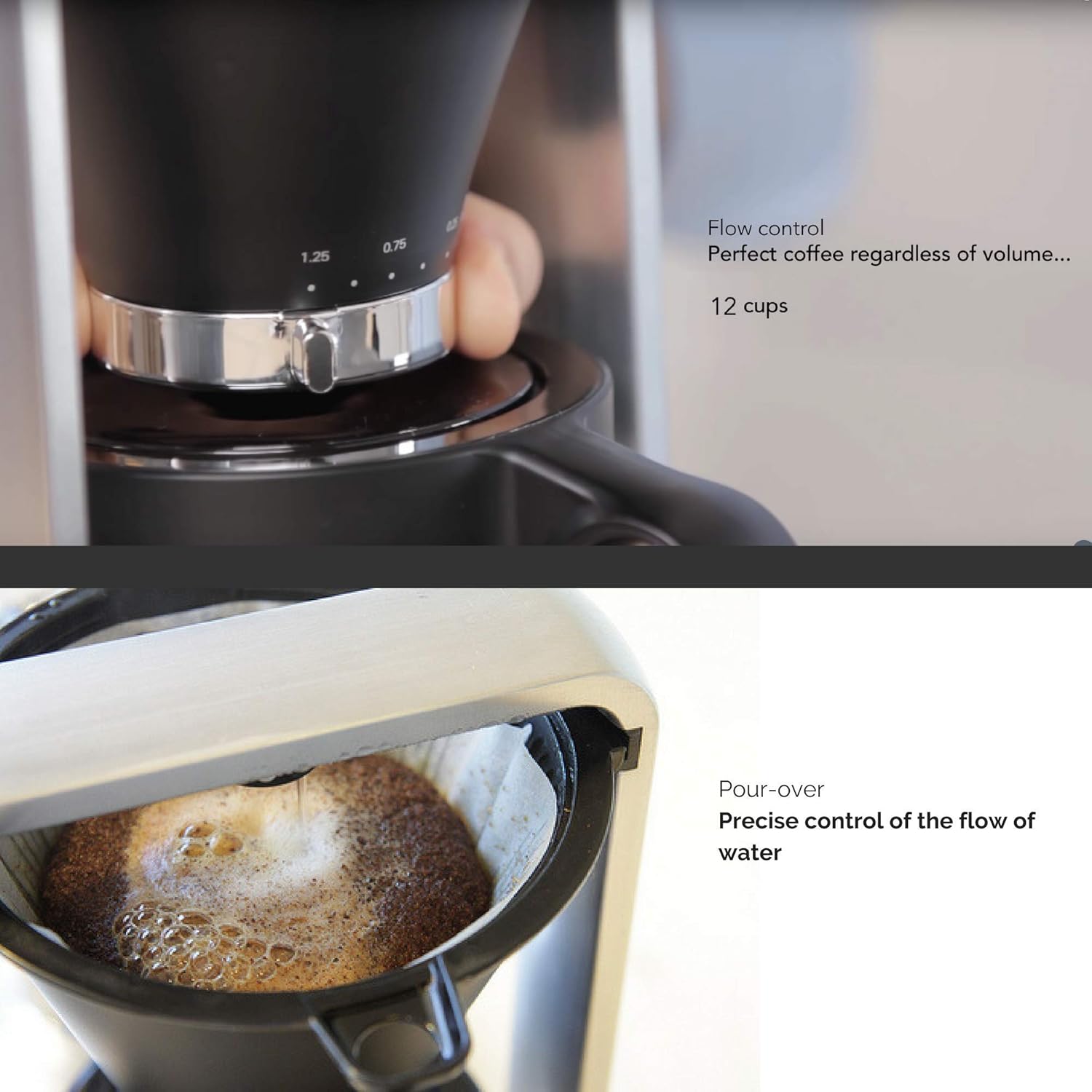
Hoto na 5: Adjusting the flow control for customized brewing.
Kulawa
- Tsaftace Kullum: After each use, discard used coffee grounds and filter. Wash the filter holder, glass carafe, and lid with warm, soapy water. The detachable water tank can also be easily cleaned. Rinse thoroughly and dry.
- Tsabtace Waje: Goge wajen mai yin kofi tare da taushi, damp zane. Kada a yi amfani da masu tsabtace ƙura ko nutsar da babban sashin cikin ruwa.
- Faduwa: Depending on water hardness, descale the coffee maker regularly (e.g., every 1-3 months) to prevent mineral buildup. Use a commercial descaling solution suitable for coffee makers or a mixture of white vinegar and water (1:1 ratio). Follow the descaling product's instructions or run a brew cycle with the solution, then rinse by running several cycles with fresh water.
Shirya matsala
- Kofi Ba a Girki ba:
- Tabbatar cewa an toshe igiyar wutar lantarki cikin aminci.
- Check if the water tank is properly seated and filled with water.
- Verify the start button has been pressed.
- Slow Brewing or Clogged Filter:
- Check the flow control setting; a slower setting will result in a longer brew time.
- Ensure the coffee grounds are not too fine, which can clog the filter.
- Descale the machine if mineral buildup is suspected.
- Zubar Ruwa:
- Ensure the water tank is correctly positioned and not overfilled.
- Check that the filter holder and carafe are properly aligned.
- Coffee Tastes Weak or Too Strong:
- Daidaita rabon kofi-da-ruwa.
- Experiment with the grind size of your coffee beans.
- Adjust the flow control setting to achieve desired strength.
Ƙayyadaddun bayanai
| Siffar | Daki-daki |
|---|---|
| Alamar | Wilfa |
| Lambar Samfura | WSP-1B |
| Iyawa | 1.25 Liters (approx. 42 fl oz) |
| Launi | Baki |
| Nau'in Mai yin Kofi | Zuba Sama |
| Yanayin Aiki | Cikakken atomatik |
| Watatage | 1050 watts |
| Shigar da Haɗin Dan Adam | Kariyar tabawa |
| Nau'in Tace | Maimaituwa |
| Nauyin Abu | 5 fam (kimanin 2.27 kg) |
| Kayan abu | Gilashi (Karafe) |
| Abubuwan da aka haɗa | Karafe, Tace |
| Optimal Brewing Temperature | 197º-205ºF (91.6º-96.1ºC) |
Garanti da Taimako
For warranty information and customer support, please refer to the documentation included with your purchase or visit the official Wilfa website. Ajiye shaidar siyan ku don kowane da'awar garanti.