Introduction to Simplicity Pattern 2600
This instruction manual provides guidance for using Simplicity Sewing Pattern 2600, designed for creating a collection of quilted travel accessories. The pattern includes instructions for six distinct items, all designed for one size (OS).
The pattern is part of the Simplicity Summer 2009 collection and is suitable for individuals interested in crafting personalized travel items.
Haɗe da Na'urorin haɗi
Simplicity Pattern 2600 allows you to create the following six quilted travel accessories:
- Hanging Organizer (Item C in image)
- Duffle Bag (Items A, F in image)
- Tote Bag (Item B in image)
- Pillow (part of Item B in image)
- Small Pouch (Item D in image)
- Wallet/Card Holder (Item E in image)
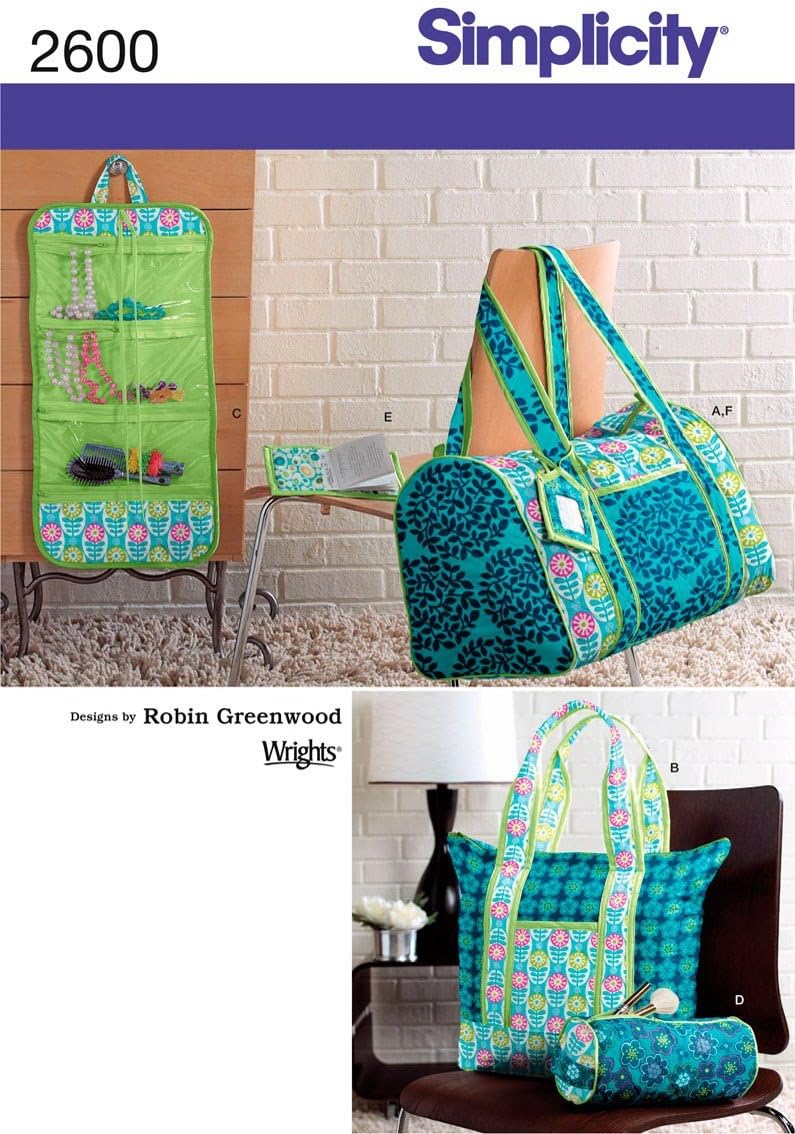
Hoto: Overview of the six quilted travel accessories that can be made with Simplicity Pattern 2600. The image displays a green hanging organizer, a teal duffle bag, a teal tote bag with a matching pillow, a small cylindrical pouch, and a compact wallet, all featuring floral and leaf patterns.
Abubuwan da ake buƙata
Before beginning your project, ensure you have all necessary materials. Specific fabric types, yardage, and notions will be detailed within the pattern envelope. General requirements typically include:
- Fabric: Recommended fabric types (e.g., cotton, canvas, quilting cotton) and required yardage for each accessory.
- Rufe Fabric: Often required for a neat finish and added durability.
- Interfacing/Batting: For structure, quilting, and padding.
- Zare: All-purpose sewing thread matching your fabric colors.
- Ra'ayoyi: Zippers, buttons, D-rings, buckles, elastic, cording, or other closures as specified for each item.
- Kayayyakin Dinki na asali: Sewing machine, scissors, pins, measuring tape, fabric markers, seam ripper, iron, and ironing board.
Saita: Shirya Tsarinku da Fabric
- Read the Pattern: Carefully read all instructions and diagrams provided in the Simplicity 2600 pattern envelope before cutting any fabric. Familiarize yourself with the construction steps and specific requirements for each accessory.
- Kayan riga-kafi: Wash and dry your chosen fabrics according to their care instructions. This prevents shrinkage after your project is complete and removes any manufacturing finishes.
- Latsa Fabric: Iron all fabric pieces smooth to ensure accurate cutting and sewing.
- Identify Pattern Pieces: Locate all necessary pattern pieces for the accessory you intend to make. Cut them out carefully along the indicated lines.
- Shirya da Yanke Fabric: Follow the cutting layouts provided in the pattern for your fabric width. Pin pattern pieces securely to the fabric and cut accurately. Transfer all markings (notches, dots, darts) from the pattern pieces to your fabric using tailor's chalk or a fabric marker.
Aiki: Umarnin dinki
The Simplicity 2600 pattern provides detailed, step-by-step instructions for constructing each travel accessory. Adhere closely to these instructions for best results.
- Bi Mataki-mataki: Work through the pattern instructions sequentially. Do not skip steps unless explicitly indicated.
- Seam Allowances: Pay close attention to the specified seam allowances for each seam. Consistent seam allowances are crucial for accurate sizing and fit.
- Latsa: Press seams open or to one side as instructed after each sewing step. Proper pressing is essential for a professional finish.
- Notions Application: Install zippers, buttons, and other notions according to the pattern's guidance. Refer to specific instructions for these components.
- Ƙarshe: Complete all finishing steps, such as hemming, topstitching, and adding any final embellishments, to give your accessories a polished look.
Maintenance: Care for Your Quilted Accessories
To ensure the longevity and appearance of your handmade quilted travel accessories, follow these general care guidelines:
- Wanka: Machine wash in cold water on a gentle cycle with mild detergent. If the fabric is delicate or heavily embellished, hand washing is recommended.
- bushewa: Tumble dry on low heat or air dry flat to prevent shrinkage and maintain shape. Avoid high heat, which can damage quilting and fabric.
- Guga: Iron on a low to medium setting, if necessary, avoiding any plastic or heat-sensitive notions.
- Ajiya: Store accessories in a clean, dry place away from direct sunlight to prevent fading.
Shirya matsala Batun dinki gama gari
If you encounter difficulties during the sewing process, consider these common issues and solutions:
- Dinki da aka tsallake: Check your needle; it might be dull, bent, or inserted incorrectly. Ensure the correct needle type for your fabric is used. Re-thread your machine.
- Dike Mara Daidai: Verify your tension settings. Both upper and bobbin tension should be balanced. Ensure your fabric is feeding smoothly without being pulled or pushed excessively.
- Tushen Fabric: This can be due to incorrect tension, a dull needle, or pulling the fabric. Adjust tension, change the needle, and allow the machine to feed the fabric naturally.
- Pattern Pieces Don't Align: Double-check your cutting accuracy and ensure all markings were transferred correctly. Re-measure and re-cut if necessary.
- Difficulty with Zippers/Notions: Refer to specific instructions for installing these components. Use appropriate presser feet and take your time.
Ƙayyadaddun bayanai
- Alamar: Sauki
- Lambar Samfura: 2600
- Nau'in Samfur: Sewing Pattern for Accessories
- Girma: OS (One Size)
- Abu: Paper (for the pattern itself)
- Number of Looks Included: 6
- Product Dimensions (Pattern Envelope): 0.51 x 14.61 x 20.96 cm; 40g ku
- Kwanan Wata Farko Akwai: Oktoba 28, 2011
- UPC: 039363526001, 400110994471
Taimako
For additional assistance, pattern corrections, or general inquiries regarding Simplicity patterns, please visit the official Simplicity website or contact their customer support directly. The pattern envelope may also contain specific contact information.
You can often find helpful resources, tutorials, and FAQs on the Sauki website.


