1. Samfurin Ya Ƙareview
This manual provides essential information for the proper handling, installation, and maintenance of the Audi 8N0906018AL Engine Control Module (ECM). This genuine Audi part is designed to fit specific 2002 Audi TT vehicles, ensuring optimal engine performance and compliance with vehicle specifications. The ECM, also known as an Engine Control Unit (ECU) or computer module, is a critical component responsible for managing various engine functions.
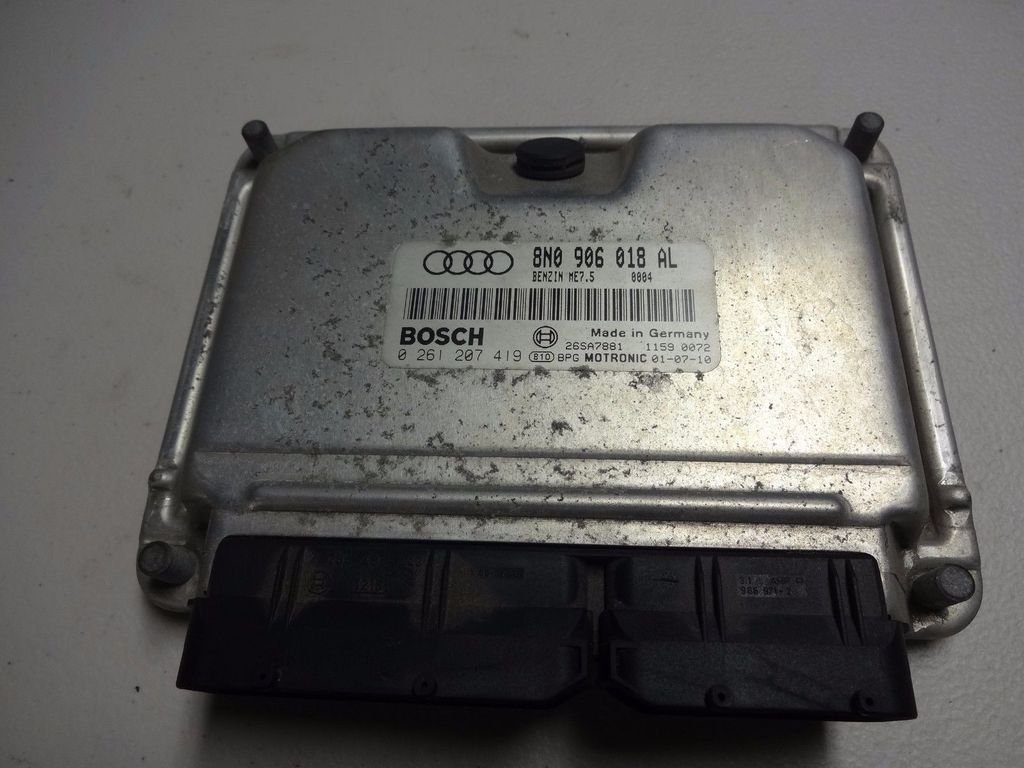
Figure 1: Audi 8N0906018AL Engine Control Module. Key markings visible include the Audi rings logo, the part number 8N0 906 018 AL, 'BENZIN ME7.5', 'BOSCH', and the Bosch part number '0 261 207 419'. It also indicates 'Made in Germany' and 'MOTRONIC 01-07-10'.
2. Bayanin Tsaro
Always observe the following safety precautions when working with automotive electronic components:
- Disconnect the vehicle's battery: Before beginning any installation or removal procedure, always disconnect the negative terminal of the vehicle's battery to prevent electrical shock or damage to electronic systems.
- An ba da shawarar shigarwa na ƙwararru: Installation of an ECM requires specialized knowledge and tools. It is highly recommended that installation be performed by a qualified automotive technician.
- Electrostatic Discharge (ESD) precautions: Electronic components are sensitive to static electricity. Handle the ECM by its casing, avoiding contact with electrical pins. Use appropriate ESD protection if available.
- Guji lalacewa ta jiki: Do not drop, strike, or expose the ECM to excessive force or moisture.
- Tabbatar da dacewa: Ensure the part number matches your vehicle's requirements before installation.
3. Saita da Shigarwa
The installation of an Engine Control Module typically involves several steps and may require vehicle-specific programming. It is strongly advised that this procedure be carried out by a certified Audi technician or a professional automotive service center.
3.1 Pre-Ininstalling Checks
- Tabbatar da Lambar Sashe: Confirm that the part number 8N0906018AL matches the original ECM being replaced and is compatible with your 2002 Audi TT.
- Duba Lalacewar: Visually inspect the new ECM for any signs of shipping damage.
3.2 Installation Procedure (Professional Installation Recommended)
- Cire haɗin baturi: Cire haɗin mara kyau na baturin abin hawa.
- Locate Old ECM: Identify the location of the existing ECM in your vehicle (typically under the hood or dashboard).
- Cire haɗin Waya: Carefully disconnect all electrical connectors from the old ECM. Note their positions if necessary.
- Remove Old ECM: Unmount and remove the old ECM from its bracket.
- Install New ECM: Mount the new 8N0906018AL ECM into the bracket.
- Haɗa Waya: Reconnect all electrical connectors to the new ECM, ensuring they are securely latched.
- Sake haɗa baturi: Sake haɗa mummunan tasha na baturin abin hawa.
- Programming (Crucial Step): The new ECM will likely require programming or coding to match your vehicle's immobilizer system and other specific configurations. This step requires specialized diagnostic equipment and software, typically performed by an Audi dealership or a qualified independent specialist. Failure to program the ECM correctly will prevent the vehicle from starting or operating properly.
4. Umarnin Aiki
Once properly installed and programmed, the Audi 8N0906018AL ECM operates automatically as an integral part of your vehicle's engine management system. It continuously monitors various sensors and actuators to optimize fuel injection, ignition timing, emissions control, and other critical engine parameters. No direct user interaction is required for its operation.
If the vehicle exhibits unusual behavior after ECM replacement, refer to the Troubleshooting section or consult a professional technician.
5. Kulawa
The Audi 8N0906018AL ECM is a sealed electronic unit and contains no user-serviceable parts. Regular maintenance is not required for the unit itself. To ensure its longevity and proper function:
- Keep the surrounding area clean and free from excessive dust or debris.
- Ensure the ECM remains dry and protected from moisture or water ingress.
- Avoid exposing the unit to extreme temperatures beyond the vehicle's normal operating range.
- Periodically check the electrical connectors for corrosion or looseness.
6. Shirya matsala
If you experience issues after installing the new ECM, consider the following common troubleshooting steps. Due to the complexity of engine control systems, professional diagnosis is often necessary.
- Engine Warning Light (Check Engine Light): If the check engine light illuminates, it indicates a fault detected by the ECM. A diagnostic scan tool is required to retrieve Diagnostic Trouble Codes (DTCs) to identify the specific issue.
- No Start / Cranks but No Start:
- Verify battery connections are secure and the battery is charged.
- Confirm all ECM electrical connectors are fully seated.
- Ensure the ECM has been correctly programmed to the vehicle's immobilizer system. This is a common cause for a no-start condition after ECM replacement.
- Poor Engine Performance (Rough Idling, Misfires, Loss of Power): These symptoms can indicate various issues, including incorrect ECM programming, faulty sensors, or other engine component failures. A professional diagnostic scan is essential.
- Abubuwan Sadarwa: If a scan tool cannot communicate with the ECM, check power and ground connections to the ECM, as well as the vehicle's data bus (CAN bus) wiring.
Shawarwari: For any persistent issues, consult a qualified Audi service technician. They possess the necessary diagnostic tools and expertise to accurately diagnose and resolve complex ECM-related problems.
7. Ƙayyadaddun bayanai
| Lambar Sashe: | 8N0906018AL |
| Mai ƙira: | Audi |
| Samfurin Mai jituwa: | 2002 Audi TT |
| Bosch Part Number: | 0 261 207 419 |
| Asalin masana'anta: | Jamus |
| Nau'in Mai: | Benzin (Gasoline) |
| Motronic Version: | ME7.5 (MOTRONIC 01-07-10) |
| ASIN: | B00LLDLRA2 |
| UPC: | 744904236362 |
8. Garanti da Tallafawa
For information regarding the warranty of your Audi 8N0906018AL Engine Control Module, please refer to the terms and conditions provided by your original point of purchase or contact an authorized Audi dealership directly. Warranty coverage typically applies to manufacturing defects and does not cover damage resulting from improper installation, misuse, or external factors.
For technical support, service, or professional installation assistance, it is recommended to contact a certified Audi service center or a qualified automotive technician specializing in Audi vehicles.


