Gabatarwa
This manual provides essential information for the safe installation and understanding of the De'Longhi High Voltage Fuse and Holder, designed for specific microwave oven models MW20 and MW663F. This component is a critical safety device within the microwave's high-voltage circuit. Due to the inherent dangers of high voltage, installation should only be performed by a qualified technician.
Muhimman Umarnin Tsaro
GARGADI: Microwave ovens contain high-voltage components that can store a lethal electrical charge even when unplugged. Attempting repairs or component replacement without proper training and equipment can result in severe injury or death.
- Ana Bukatar Shigar Ƙwararru: This component must be installed by a qualified and experienced microwave repair technician.
- Cire haɗin Wuta: Always ensure the microwave oven is unplugged from the power outlet and the capacitor is fully discharged before attempting any service.
- Use Correct Part: Only use the specified De'Longhi fuse and holder for models MW20 and MW663F to ensure compatibility and safety.
- Kar a Ketare Na'urorin Tsaro: Never bypass or modify safety interlocks or protective devices.
Samfurin Ƙarsheview
The De'Longhi High Voltage Fuse and Holder is an essential protective device for your microwave oven's high-voltage circuit. It is designed to interrupt the electrical current in case of an overload or short circuit, preventing damage to other components and ensuring user safety. This specific fuse is rated for 5 kW and 0.7 Amperes.
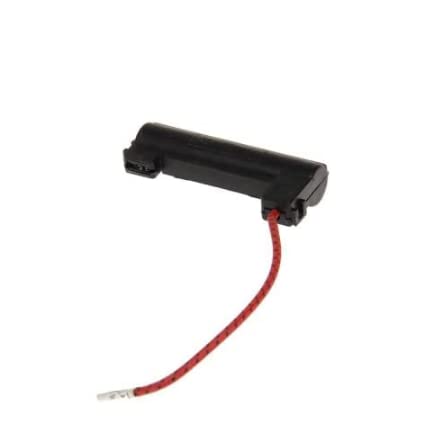
Image: De'Longhi High Voltage Fuse and Holder. This image shows the compact design of the fuse and its holder, typically found within the high-voltage section of a microwave oven.
Installation (Professional Service Only)
This section outlines the general steps for replacing the high voltage fuse and holder. This procedure must only be performed by a certified technician.
- Kashe Haɗin Wuta: Unplug the microwave oven from the main power supply.
- Fitar Capacitor: Safely discharge the high-voltage capacitor using an appropriate discharge tool. Verify discharge with a multimeter.
- Abubuwan shiga: Remove the microwave's outer casing to gain access to the high-voltage transformer, capacitor, and magnetron area.
- Locate Fuse and Holder: Identify the existing high-voltage fuse and its holder. It is typically connected in series with the high-voltage transformer and capacitor.
- Cire Tsohon Sashe: Carefully disconnect the wiring from the old fuse holder and remove the component. Note the orientation and connections.
- Shigar Sabon Bangaren: Connect the new De'Longhi High Voltage Fuse and Holder (5 kW, 0.7 A) in the same manner as the old one. Ensure all connections are secure and properly insulated.
- Sake tarawa da Gwaji: Reassemble the microwave casing. Before plugging in, perform continuity checks. Plug in the microwave and perform a functional test with a cup of water to ensure proper operation and heating.
Function and Role
Babban voltage fuse acts as a sacrificial component, designed to blow and break the circuit if there is an excessive current draw in the high-voltage section. This protects the more expensive components like the magnetron, high-voltage transformer, and capacitor from damage due to faults such as a shorted magnetron or a faulty capacitor. Its proper functioning is crucial for the safe operation of the microwave oven.
Kulawa
This component is a replacement part and generally requires no routine maintenance. If the fuse blows, it indicates an underlying issue within the microwave's high-voltage circuit. Simply replacing the fuse without addressing the root cause will likely result in the new fuse blowing again. Always consult a qualified technician to diagnose the cause of a blown fuse.
Shirya matsala
If your microwave oven is not heating or is completely dead after replacing the high voltage fuse and holder, consider the following:
- Fuse Blown Again: If the new fuse blows immediately, there is a persistent fault in the high-voltage circuit (e.g., faulty magnetron, capacitor, or diode).
- Shigar da ba daidai ba: Double-check all connections for proper seating and insulation.
- Other Component Failure: The fuse might have blown due to a failure in another high-voltage component. A technician can test the magnetron, capacitor, and high-voltagda diode.
- Power Supply Issue: Ensure the microwave is receiving power from the wall outlet.
Always seek professional assistance for diagnosis and repair of microwave oven faults.
Ƙayyadaddun bayanai
| Siffar | Daki-daki |
|---|---|
| Alamar | De'Longhi |
| Nau'in Samfur | Babban Voltage Fuse and Holder |
| Daidaituwa | De'Longhi Microwave Models MW20, MW663F |
| Ƙimar Ƙarfi | 5 kW |
| Ƙididdiga na Yanzu | 0.7 A |
| Girma (L x W x H) | 1 x 1 x 7 cm |
| Nauyi | 10g ku |
| ASIN | B074FXRYJQ |
Garanti da Taimako
Information regarding specific warranty terms for this replacement part is not available in the provided product details. Please refer to your original microwave oven's warranty documentation or contact De'Longhi customer support for details on replacement part warranties. For technical support, always consult a qualified appliance repair professional.