Gabatarwa
This document serves as an instruction manual for the Simplicity Sewing Pattern S9204. This pattern provides the necessary templates and instructions to create various children's and girls' garments, including gathered tops, dresses, gowns, and pants. Please note that this product is a sewing pattern and not a finished garment. The designs feature self-lined yokes, a raised waist, and a back slit with button/thread loop closing. Specific views include self-ruffles (C, D), elasticized pants and sleeves (B, C, D), narrow hems, and stitched hems (F). The pattern also incorporates details for purchased trims, appliqués (A), and bias tape for sleeve casings (B, C, D).
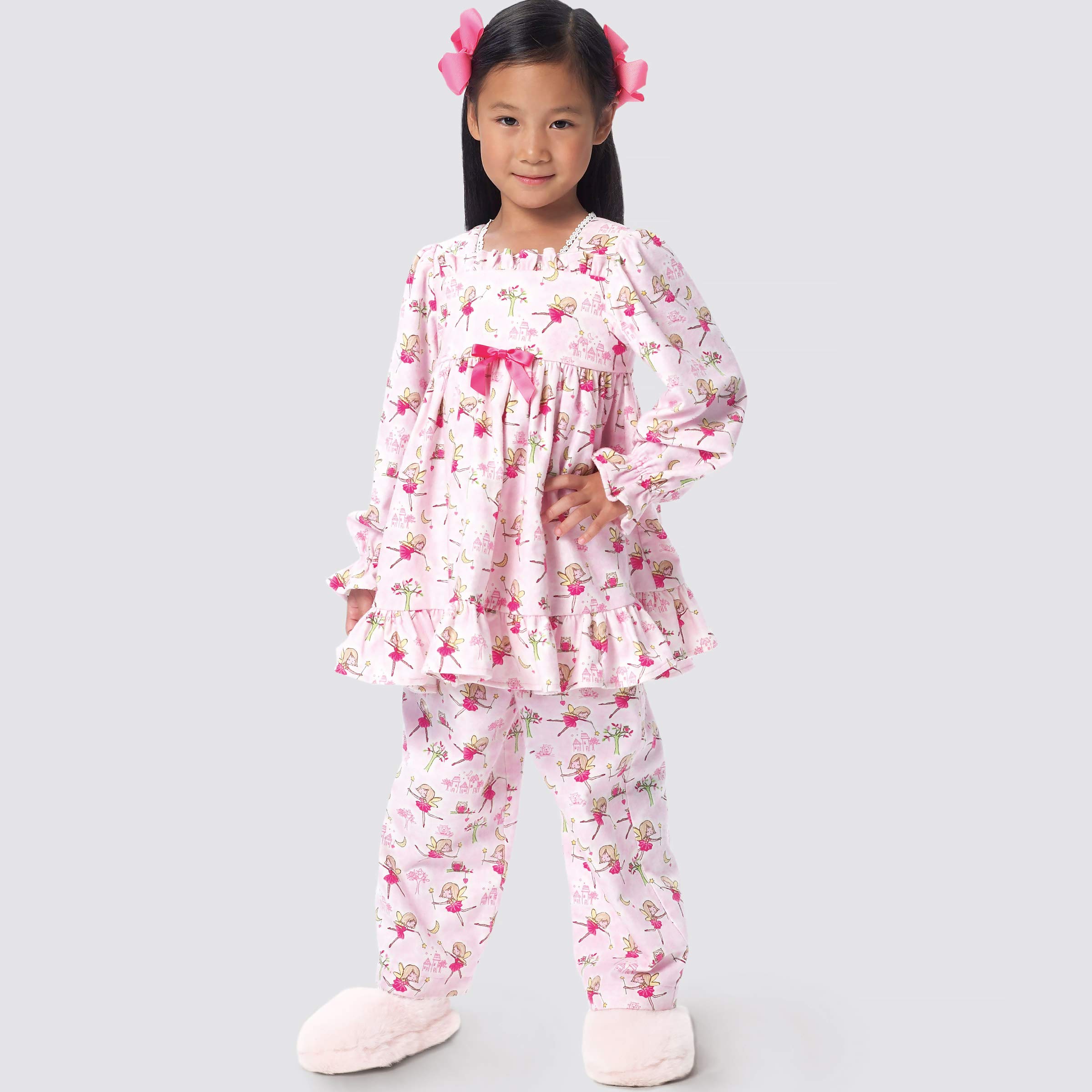
This image displays the front of the Simplicity S9204 pattern envelope, featuring design illustrations for various children's/girls' garments including a gathered top, dress, gown, and pants. A child model is shown wearing a completed gown and pants set, demonstrating the style and fit of the finished items.
Saita
Before beginning your sewing project, ensure you have all the required materials and understand the pattern pieces. Refer to the pattern envelope for specific fabric and notion requirements for your chosen garment view.
Abubuwan da ake buƙata:
- Abubuwan da aka Shawarta: Broadcloth, Cotton Blends, Eyelet, Gingham, Poplin, Seersucker. Extra fabric may be needed to match plaids, stripes, or one-way design fabrics.
- Ra'ayoyi: Thread, one 3/8" (1cm) button, 1/4" (6mm) elastic, 1/2" (1.3cm) bias tape, purchased trims, and appliqué (for View A). Specific quantities are detailed on the pattern envelope.
- Kayan aiki: Sewing machine, scissors, pins, measuring tape, iron, marking tools.
Shiri Tsari:
- Carefully open the pattern envelope and unfold all pattern pieces.
- Identify the pattern pieces required for your chosen garment view.
- Press pattern pieces with a dry iron on a low setting if they are wrinkled.
- Refer to the cutting layouts provided within the pattern for efficient fabric usage and correct grainlines.

This image displays the reverse side of the pattern envelope, detailing the recommended fabrics, required notions such as thread, buttons, elastic, and bias tape, and a comprehensive size chart for children's/girls' sizes A (3-4-5-6-7-8). It also includes finished garment measurements for tops, dresses, gowns, and pants.
Operating (Sewing Instructions)
Follow the detailed step-by-step instructions provided inside your Simplicity S9204 pattern envelope. The general process involves:
- Karanta Umarni: Thoroughly read all instructions and diagrams before cutting or sewing.
- Yanke Fabric: Lay out fabric according to the cutting guide for your chosen view and size. Cut all pattern pieces accurately.
- Transfer Markings: Transfer all pattern markings (dots, notches, darts, etc.) to your fabric pieces using appropriate marking tools.
- Sewing Construction:
- Assemble garment sections as indicated, paying close attention to seam allowances.
- Construct self-lined yokes and attach them to the main garment body.
- Create the raised waistline as specified.
- Form the back slit and attach the button/thread loop closing.
- Domin Views C and D, create and attach self-ruffles.
- For pants and sleeves B, C, D, insert and secure elastic as instructed.
- Finish all hems, using a narrow hem technique or stitched hems for View F.
- Attach any purchased trims, appliqué (for View A), and bias tape for sleeve casings (B, C, D) according to the pattern.
- Latsa: Press seams and garment sections as you sew to ensure a professional finish.
Kulawa
Proper care of your finished garments will ensure their longevity. For the sewing pattern itself, proper storage is key for future use.
Kulawar Tufafi:
- Always follow the care instructions for the specific fabric you used to create your garment.
- Generally, machine wash cold with like colors, tumble dry low, and iron on a low setting if needed. Avoid bleach.
Tsarin Kulawa:
- After use, carefully refold all pattern pieces.
- Store the pattern pieces back in the original envelope to keep them organized and protected from damage.
- Keep the pattern in a dry, cool place away from direct sunlight to prevent deterioration.
Shirya matsala
Encountering issues during sewing is common. Here are some general tips to help resolve common problems:
- Matsalolin dinki: If stitches are uneven or skipped, check your sewing machine's tension settings, ensure the needle is inserted correctly and is not bent or dull, and use the correct needle type for your fabric.
- Tushen Fabric: This can be caused by incorrect tension, a dull needle, or sewing too fast. Try adjusting tension, changing the needle, or slowing down your sewing speed.
- Abubuwan da suka dace: Before cutting your main fabric, consider making a muslin (test garment) from inexpensive fabric to check the fit. Refer to the finished garment measurements on the pattern envelope and make any necessary adjustments to the pattern pieces.
- Alamar Samfura: If you missed transferring a marking, refer back to the pattern instructions and diagrams to locate its position.
- Confusing Instructions: If an instruction is unclear, try re-reading it slowly, looking at the accompanying diagrams, or searching for general sewing tutorials online for that specific technique.
Ƙayyadaddun bayanai
| Lambar Samfura | SS9204A |
| Alamar | Sauki |
| UPC | 039363592044 |
| Girman Rage | A (Children's/Girls' 3-4-5-6-7-8) |
| Garment Types | Pullover Top, Dress, Gown, Pants |
| Mabuɗin Siffofin | Self-lined yokes, raised waist, back slit, button/thread loop closing, self-ruffles (C, D), elasticized pants/sleeves (B, C, D), narrow hem, stitched hems (F) |
| Abubuwan da aka Shawarar | Broadcloth, Cotton Blends, Eyelet, Gingham, Poplin, Seersucker |
| Girman Kunshin | 9.29 x 5.94 x 0.28 inci |
| Nauyin Abu | 2.85 oz |
| Mai ƙira | CSS Industries, Inc. |
| Kwanan Wata Farko Akwai | Oktoba 15, 2020 |
Garanti da Taimako
This product is a sewing pattern, which is a consumable craft item. As such, specific warranty information for the pattern itself is generally not provided. For support regarding the pattern instructions, missing pieces, or general inquiries, please refer to the contact information provided by Simplicity Patterns. This information is typically found on the pattern envelope or their official website. Always ensure you are using an authentic Simplicity pattern for accurate instructions and design.


