1. Gabatarwa
The ASUS DC300 Docking Station is a compact device designed to streamline laptop connectivity and enhance productivity. It allows users to connect multiple peripherals, external displays, and power their laptop through a single USB-C cable. This manual provides detailed instructions for setting up, operating, and maintaining your docking station.
2. Samfurin Ya Ƙareview
The ASUS DC300 Docking Station offers extensive connectivity options in a sleek, durable design. Its metal construction ensures longevity and a sophisticated appearance that blends seamlessly into any workspace. Key features include support for multiple displays, high-speed data transfer ports, and pass-through charging capabilities.
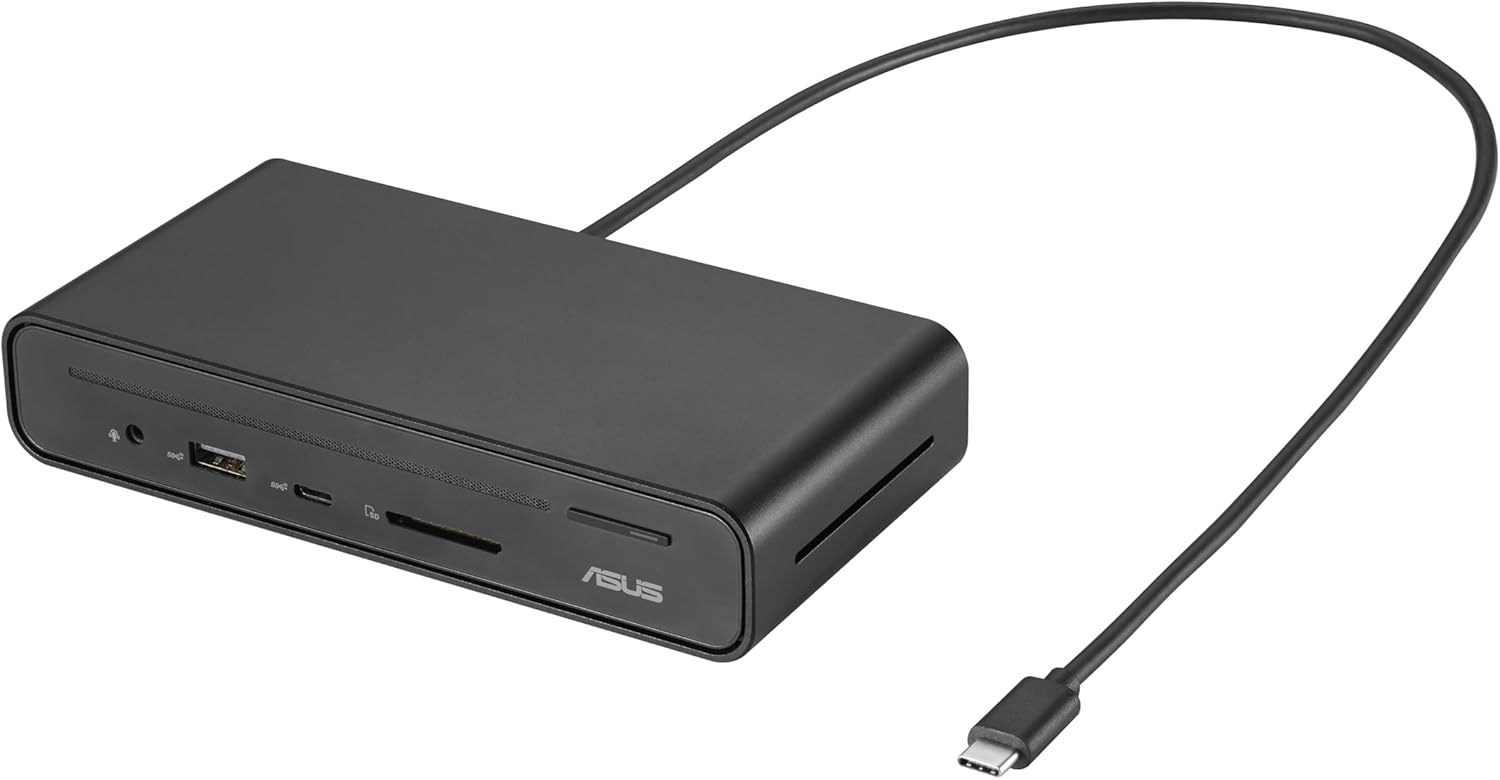
Figure 2.1: ASUS DC300 Docking Station with attached USB-C cable.
3. Abubuwan Kunshin
Tabbatar cewa duk abubuwa suna cikin kunshin:
- ASUS DC300 Docking Station
- USB Type-C Cable (braided)
- Magnetic Base with Adhesive
- Jagorar mai amfani (wannan takaddar)
4. Physical Components and Port Layout
The docking station features a variety of ports for comprehensive connectivity. Familiarize yourself with the port layout for optimal use.
4.1 Front Panel Ports
- 1x USB Type-C Port (10 Gbps): Don canja wurin bayanai mai sauri.
- 1x USB Type-A Port (10 Gbps): Don canja wurin bayanai mai sauri.
- Mai karanta katin SD: For reading standard SD memory cards.
- Mai karanta Katin MicroSD: For reading MicroSD memory cards.
- 3.5mm Audio Jack: For connecting headphones or external audio devices.
- Maɓallin Wuta: To power on/off the docking station.

Hoto 4.1: Gaba view of the docking station with accessible high-speed data and media card ports.
4.2 Rear Panel Ports
- 2x HDMI Ports (4K@60Hz): Don haɗa nunin waje.
- 2x DisplayPort (4K@60Hz): Don haɗa nunin waje.
- 1x USB Type-C PD Port (100W): For power delivery to your laptop and pass-through charging.
- 1x USB Type-A Port (10 Gbps): Don canja wurin bayanai mai sauri.
- 1x USB Type-A Port (480 Mbps): For connecting peripherals like keyboard/mouse dongles.
- 1x Gigabit Ethernet Port: For stable wired network connection.

Hoto 4.2: Na baya view of the docking station with various display, power, and network ports.
5. Jagorar Saita
Follow these steps to set up your ASUS DC300 Docking Station:
- Sanya Dock: Place the docking station on a flat, stable surface. You may use the included magnetic base to secure it to your desk. Ensure the adhesive is applied to a suitable surface if you intend to use it permanently.
- Haɗa zuwa Laptop: Connect the braided USB Type-C cable from the docking station's "To Laptop" port (rear panel) to your laptop's USB Type-C port.
- Haɗa Wutar Lantarki (Zaɓi ne amma ana ba da shawarar): For optimal performance, especially with multiple displays and charging, connect your laptop's USB Type-C power adapter to the docking station's "USB Type-C PD" port (rear panel). This enables pass-through charging for your laptop.
- Haɗa Nuni: Use HDMI or DisplayPort cables to connect your external monitors to the corresponding ports on the rear panel of the docking station.
- Abubuwan Haɗawa: Plug in your mouse, keyboard, external drives, or other USB devices to the available USB Type-A or USB Type-C ports on the front or rear panels.
- Haɗa zuwa Cibiyar sadarwa (Zaɓi ne): For a stable wired internet connection, connect an Ethernet cable to the Gigabit Ethernet port on the rear panel.
- Kunna Wuta: Press the power button on the front panel to turn on the docking station. The digital LED display will illuminate, showing the status of connected ports.
6. Umarnin Aiki
6.1 Yanayin Nuni
Tashar docking tana goyan bayan saitunan nuni daban-daban:
- Windows Systems: Supports single, dual, and triple external displays in extended or mirrored modes. Resolutions up to 4K@60Hz are supported for single/dual displays, and 4K@30Hz for triple displays.
- Mac OS Systems: Supports single and dual external displays. Triple display is not supported in extended mode; displays will be mirrored.

Hoto na 6.1: Example of a triple monitor setup with the ASUS DC300 Docking Station.
6.2 Canja wurin Data
Utilize the high-speed USB ports for quick data transfer:
- USB 3.2 Gen 2 Ports (10 Gbps): Ideal for transferring large files to/from external SSDs or other high-speed devices.
- SD/MicroSD Card Readers: For fast transfer of photos and videos from memory cards.
6.3 One-Click Screen Lock
The power button on the top of the docking station also functions as a screen lock button:
- Windows: Press the button once to instantly lock your displays.
- MacOS: Press the button twice to lock your displays.
7. Kulawa da Kulawa
- Keep the docking station in a clean, dry environment.
- Ka guji fallasa na'urar zuwa matsanancin zafi ko hasken rana kai tsaye.
- Clean the surface with a soft, dry cloth. Do not use liquid cleaners.
- Ensure cables are properly connected and not under strain to prevent damage.
8. Shirya matsala
Idan kun haɗu da al'amura, koma zuwa mafita gama gari masu zuwa:
- Unstable LAN Connection: If the LAN connection is unstable or disconnects, especially after sleep mode, try disabling and re-enabling the network driver in your operating system settings.
- Power Button Not Functioning: Ensure the docking station is properly connected to your laptop and, if applicable, to a power source.
- Fitowar allo: Check all display cable connections. Ensure your display drivers are up to date. Verify that your monitor and cable support the selected resolution and refresh rate.
- Babu Fitar Nuni: Confirm that your laptop's USB-C port supports video output (DisplayPort Alt Mode). Ensure all display cables are securely connected. Check your display settings in your operating system.
- Abubuwan Cajin: Ensure your laptop's power adapter is connected to the docking station's USB Type-C PD port. Verify that your laptop supports USB-C power delivery.
9. Ƙayyadaddun bayanai
| Siffar | Daki-daki |
|---|---|
| Lambar Samfura | 90XB08CN-BDS000 |
| Girman samfur | 3.66 x 3.27 x 0.98 inci |
| Nauyin Abu | 1.1 fam |
| Fasahar Haɗuwa | Waya |
| Ƙarfin caji | Yes (up to 100W via USB-C PD) |
| Nuni Support | 3 Displays Supported (4K resolution) |
| HDMI Ports | 2 (4K@60Hz) |
| DisplayPort | 2 (4K@60Hz) |
| Jimillar tashoshin jiragen ruwa na USB | 4 (2x USB 3.2 Gen 2 Type-A, 1x USB 3.2 Gen 2 Type-C, 1x USB 2.0 Type-A) |
| Ethernet | Gigabit Ethernet |
| Mai karanta katin ƙwaƙwalwa | SD, MicroSD |
| Na'urori masu jituwa | Expertbook (and other USB-C compatible laptops) |
10. Garanti da Tallafawa
For warranty information and customer support, please refer to the official ASUS website or contact their customer service directly. The product typically comes with a manufacturer's warranty. Please retain your proof of purchase for warranty claims.
Tallafin ASUS: https://www.asus.com/support/


