1. Gabatarwa
Thank you for choosing HABNI Child Safety Cabinet and Drawer Locks. This manual provides essential information for the proper installation, operation, and maintenance of your child safety locks. These locks are designed to help prevent young children from accessing potentially dangerous areas such as cabinets, drawers, refrigerators, and other household appliances.
2. Abubuwan Kunshin
- 4 x HABNI Child Safety Locks (White)
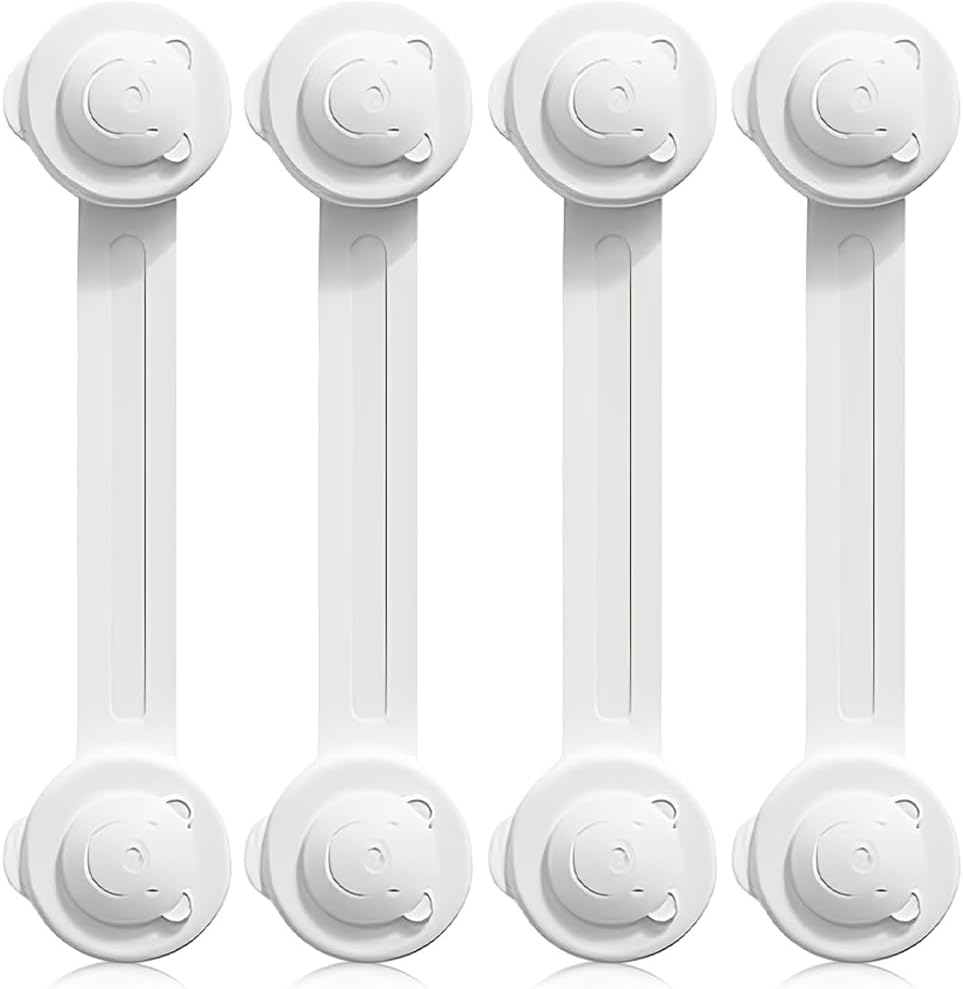
Hoto na 1: Ƙarsheview of the four HABNI Child Safety Locks included in the package.
3. Kayan Samfura
- Babu buƙatar hakowa: Easy installation with strong adhesive, eliminating the need for tools or drilling.
- Ƙarfafan mannewa: Equipped with durable adhesive for secure attachment.
- Cire Rago-Kyau: Can be removed without leaving marks by applying heat (e.g., with a hairdryer) for 1-2 minutes.
- Tsaron Yara: Designed to keep children and pets away from hazardous household items and areas.
- Ƙirƙiri Multifunctional: Adjustable plastic straps allow for secure fastening on various surfaces, including flat and rounded corners.
- Faɗin Aikace-aikacen: Suitable for cabinets, refrigerators, ovens, toilets, doors, windows, drawers, washing machines, dryers, and trash bins.

Image 2: Illustration of the wide range of applications for the child safety locks, including cabinets, ovens, refrigerators, and toilets.
4. Ƙayyadaddun bayanai
| Siffa | Daraja |
|---|---|
| Alamar | HABNI |
| Lambar Samfura | HAB2505AXQ121 |
| ASIN | B0FBVTNXVT |
| Girman Kunshin | 16 x 13 x 2.1 cm |
| Nauyin Abu | 50g ku |
| Launi | Fari |

Image 3: Product dimensions indicating a length of 16 cm (6.3 inches).
5. Saita da Shigarwa
Follow these steps for proper installation of your child safety locks:
- Tsaftace saman: Ensure the surface of the cabinet, drawer, or appliance door is clean and dry. There should be no dust, grease, or moisture.
- Peel Off Adhesive Cover: Carefully peel off the protective plastic cover from the adhesive pads on both ends of the lock.
- Position and Stick: Place the lock in the desired position, ensuring it bridges the gap between the two surfaces you wish to secure. Press firmly for at least 5 seconds to ensure good adhesion.
- Allow to Set: For optimal adhesion, wait at least 30 minutes before attempting to use the lock. This allows the adhesive to fully bond to the surface.

Image 4: Step-by-step installation guide for the child safety locks.
6. Umarnin Aiki
To open the child safety lock:
- Locate the release mechanism on one end of the lock (often a button or a squeeze tab).
- Press or squeeze the release mechanism while simultaneously lifting the strap to unlatch it.
- Once unlatched, the strap can be moved aside to open the cabinet or drawer.
To close the child safety lock:
- Align the strap with the latching mechanism.
- Push the strap firmly into the latch until you hear a click, indicating it is securely fastened.
7. Kulawa
- Tsaftacewa: Clean the locks periodically with a damp cloth and mild soap. Avoid abrasive cleaners or solvents.
- Cire M: If you need to remove a lock, apply heat to the adhesive pad using a hairdryer for 1 to 2 minutes. This will soften the adhesive, allowing for easier, residue-free removal. Gently peel the lock away from the surface.
- Dubawa na yau da kullun: Periodically check the locks for any signs of wear, damage, or reduced adhesion. Replace any damaged locks immediately.
8. Shirya matsala
- Lock not sticking properly:
- Ensure the surface was thoroughly cleaned and dry before application.
- Verify that the lock was pressed firmly for at least 5 seconds during installation.
- Allow the adhesive to set for the recommended 30 minutes before use.
- Avoid applying to porous, uneven, or textured surfaces.
- Child can open the lock:
- Re-evaluate the placement of the lock. Ensure it is positioned in a way that makes it difficult for a child to manipulate.
- Confirm that the lock is fully latched and secure after closing.
- Remember that these locks are a deterrent and not a substitute for constant adult supervision.
9. Bayanin Tsaro
These child safety locks are designed to reduce the risk of injury or access to hazardous items. However, they are not a foolproof solution and cannot replace responsible adult supervision. Always:
- Keep hazardous materials and objects out of reach and sight, even with locks installed.
- Regularly inspect all child safety devices to ensure they are properly installed and functioning correctly.
- Educate children about potential dangers as they grow.
10. Garanti da Tallafawa
For any questions, concerns, or support regarding your HABNI Child Safety Locks, please contact the manufacturer directly through your purchase platform or the official HABNI website. Please have your model number (HAB2505AXQ121) and purchase details ready for faster assistance.